
Racquetball Shot Selection Strategy
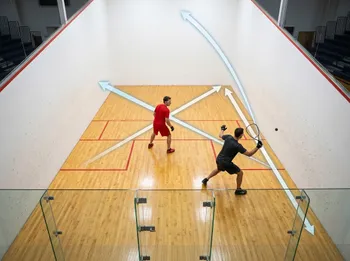
Knowing how to hit all the shots in the book only gets you halfway there. The other half is picking the right one at full speed when a rubber ball is flying back at your ankles.
When I first started playing regularly, my shot selection “strategy” was pretty simple. If I could swing at it, I tried to hit it as hard and as low as possible into the front wall. That felt incredible the one time out of ten it rolled out. The other nine times, I either skipped the ball into the floor or left a juicy waist-high rebound sitting right in center court for my opponent to put away.
Good shot selection isn’t about memorizing complicated flowcharts. It’s about playing the odds, respecting where you are on the floor, and waiting for the right ball before you try to end a rally.
The Two Questions Before You Swing
During an actual point, you don’t have time to overthink. Still, every smart shot decision comes down to two quick reads you’ll start making automatically with a bit of practice:
- Where are you and where is your opponent? If you’re standing in front of your opponent in mid-court, you hold the advantage and can go on offense. If you’re pinned behind them in a back corner while they’re camped in center court, you’re playing defense (even if the ball looks tempting).
- What kind of ball are you getting? A clean, waist-high ball dropping off the back wall with time to set your feet is a setup. A fast ball hugging the side wall, dying at your shoelaces, or bouncing up around your ears is trouble. Treat them differently.
Everything else flows from those two checks. Hit offensive shots when you have position and a clean setup. Hit defensive or neutral shots when you don’t.
When You’re on Defense (Behind Your Opponent)
Let’s start with the situation most beginners handle backward. Your opponent hits a solid shot, takes center court (see Racquetball Court Positioning), and pushes you deep into the backcourt.
Your immediate goal here is not to hit a winner. Trying to crack a low kill shot from 35 feet back is one of the lowest-percentage plays in racquetball. Even if you strike it well, the ball has to travel the entire length of the court, passing right past an opponent standing in center court with all day to step forward and cut it off.
The Ceiling Shot (Your Best Reset Button)
When you’re deep and under pressure, the ceiling shot is your best friend. It’s forgiving, it stays out of your opponent’s wheelhouse in the middle, and it forces them to retreat toward the back wall so you can walk up and reclaim center court.
A couple of practical things to keep in mind when you go to the ceiling:
- Take something off your swing. Adrenaline makes everyone hit ceiling balls too hard. If it smacks the ceiling too forcefully, it’ll fly off the back wall at chest height and turn into an easy setup for your opponent.
- Aim to keep it tight to one side. Hitting a ceiling ball down the backhand side wall makes your opponent’s return much harder than floating it down the middle of the court.
High Passing Shots and Desperation Saves
Sometimes the ball is too low or you’re stretched too far to lift a proper ceiling ball. When that happens, your next safest option is a high wide-angle pass or a lifted down-the-line pass aimed 3 to 5 feet up on the front wall. You aren’t trying to win the point outright. You’re trying to get the ball past your opponent’s reach in center court and push them back behind the short line.
Save the trickier emergency shots, like the Z-ball or hitting into the back wall, for true last-resort moments when you have zero other angle to reach the front wall. They’re fun to pull off in a pinch (no pun intended), but relying on them regularly just hands out cheap points.
Neutral Rallies and Passing Shots
Most rallies aren’t decided on one swing. You trade shots, fight for center court, and look for an opening. Passing shots are the workhorses of these neutral rallies, and choosing the right angle depends mostly on how close you are to the side wall and where your opponent is shading.
Down-the-Line vs. Cross-Court Passes
When you have a little breathing room (roughly 4 to 6 feet away from a side wall), the down-the-line shot is usually your cleanest play. You hit straight ahead so the ball comes back parallel to the side wall, away from your opponent in the middle. Just don’t get greedy and aim within an inch of the wall. Clipping the side wall first causes the ball to kick straight out into center court, which is basically serving your opponent dinner on a silver platter.
When you’re jammed tight against a side wall, or you catch your opponent leaning toward the wall expecting a straight pass, switch to a cross-court pass or wide-angle pass instead. Aiming toward the middle of the front wall sends the ball across the court into the far back corner, making your opponent run across the entire box to dig it out.
Going on Offense (When You Earn a Setup)
Everybody loves hitting kill shots, and for good reason. When the ball sits up waist-high around the short line or in front of it, and your opponent is trapped behind you, it’s time to end the point.
Still, there’s a big difference between choosing the right offensive shot and forcing a hero shot.
Picking the Right Kill Shot
- Straight front-wall kill works best when you’re in mid-court with a balanced stance and a clean look at the front wall. Hit it flat and low down the line or cross-court away from where your opponent is standing.
- Pinch shot and reverse pinch shine when you’re moving forward or hitting at an angle near the front half of the court. Clipping the side wall just before the front corner kills the ball’s forward speed and forces two quick bounces up front. The reverse pinch (hitting across into the far front corner) is especially nasty if your opponent is stuck deep on your side of the court.
- Splat shot is your sneaky weapon when a waist-high ball drops right next to a side wall in front of you. Instead of trying to get your racquet behind it for a straight shot, you crack it into the side wall at a sharp angle so it spins across the front wall and dies.
One quick reality check on kill shots. You don’t need a textbook rollout (where the ball literally rolls flat along the floor off the front wall) to win a point in recreational or club play. Aiming 3 to 6 inches above the floor gives you plenty of margin to avoid skipping the ball while still making it nearly impossible for an opponent behind you to reach.
Reading Your Opponent and Mixing It Up
Even solid shot selection gets predictable if you hit the exact same pattern every rally. Once you get comfortable with the basics above, start paying attention to the player across from you (just like reading tells on the serve return):
- Attack their weaker wing. For most right-handed recreational players, that means sending ceiling balls, passes, and even serves toward the left side wall to test their backhand.
- Punish anticipation. If your opponent starts creeping forward toward the front wall because you’ve hit two straight pinches, flick a crisp passing shot right over their shoulder. If they’re camping near the back glass waiting for ceiling balls, take your next mid-court setup straight into the front corner.
- Change speeds. Throwing a soft ceiling ball or a well-placed wide angle right after two hard-hit rallies disrupts your opponent’s timing more than simply swinging harder.
Building Smarter Habits on Court
Shot selection improves faster than almost any mechanical skill because it doesn’t require rebuilding your swing. It just requires a little patience.
Next time you play a pick-up game, try paying attention to one simple rule: no kill shots from behind the short line unless the ball is practically begging for it. Use ceiling shots and clean passing shots to earn front-court position first, then pull the trigger when the setup actually belongs to you. You’ll immediately hand away fewer easy setups, keep your opponent running instead of yourself, and finish games with way more points that you actually earned.